The Xemxija Heritage Trail is a short hillside walk above St Paul’s Bay that strings together caves, ancient tombs and old rural structures. It suits curious walkers who want archaeology without a long hike, starting right by the houses in Xemxija and rising onto limestone terraces where bees, carob and farmers once shaped the slope. Admission is free.
Whether you enjoy it depends on how you feel about a brief climb and unpolished sites. The uphill start takes 10 minutes, the paths are stony, and the best time in summer is early or late when the light is soft and the heat easier. The trail is generally quiet, so you can take your time at each stop and often have them to yourself.
Getting here is simple by public transport. Buses run every 15 minutes or less, serving the seafront through Xemxija, and it is a 5 minute walk from the bus stop to the start of the trail. If you are based in Bugibba or Qawra, you can skip the bus entirely and follow the promenade round St Paul’s Bay to Xemxija at an easy pace, a leisurely way to arrive with sea views the whole way. For an easy add on afterward, the Malta National Aquarium sits back along the same coast road in Qawra, and families often pair the two.
If you are driving, street parking on Triq ir-Ridott usually has plenty of space. From here it is a short walk up to the trailhead, which begins as a stepped, old roadway lined with garigue and low carob. The gradient bites only at the beginning, then you criss cross between signposted stops and informal side paths.
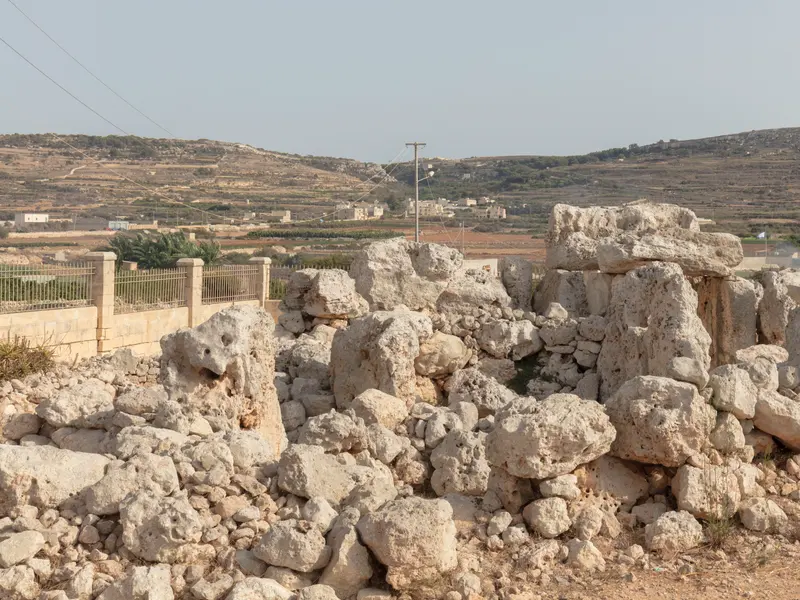
The route reads like a pocket prehistory of Malta. Dwelling caves, a farmer's hut, Neolithic and Punic tombs, and the San Pawl il-Bahar caves are all on this route, close enough together that you can wander at will without losing the thread. The apiaries are the most distinctive set pieces on the slope. There are 4 apiaries. The apiaries are half-cave, half-built, tucked into the rock to shelter bees from wind and summer heat. Each alcove has 2 stone shelves. Behind each hole sat terracotta beehives, part of a design that kept the hives orderly and the work shaded. Bees here make dark honey from carob flowers, which fits the landscape, because the slope is dotted with old carob trees and you will likely pass locals picking fallen pods when the season turns.
Pause at the venerable carob, rooted like a guardian over the track. The old carob tree is over 1,000 years old. Its trunk measures 7.25 m around. Carob fruit is ready in mid-August, when the pods turn glossy brown and sweet. Carob seeds have been used for rosary beads and as a food thickener, and carob was fed to goats, sheep, cattle, horses and rabbits. Carob syrup, called gulepp, is still popular as a cough remedy. If you like word lore, you may also hear the claim that carat comes from qirat, linked to the regular weight of a carob seed.
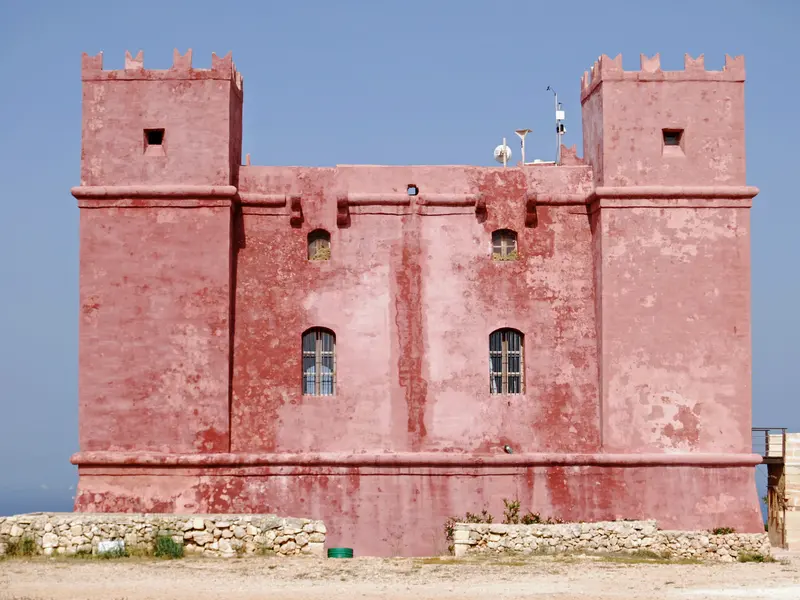
For practicalities on the walk itself, think simple. Wear trainers or walking sandals with grip, bring water and a hat, and allow time to poke into side paths without rushing back for a timetable. If you want to keep the day car free, this trail combines well with a swim or beach afternoon up the coast at Mellieha Bay or a look over the channel from the Red Tower Mellieha. If you prefer a wilder cove, head to Imgiebah Bay or continue northwest for cliffs and trails in Il Majjistral Nature History Park. Closer still are St Paul’s islets, which you can reach by booking a St Pauls Islands boat trip from the bay below.
Cost and admission could not be easier. Admission is free.
Accessibility is limited by the terrain. It is not suitable for pushchairs. It is not suitable for wheelchairs. Families with sure footed children do well here, especially kids who like caves and clambering, but keep a hand near any rock cut tombs and mind the uneven edges.
What to bring and wear depends on season, but the basics rarely change:
- Water and a hat for the climb and open sections
- Trainers or walking sandals with grip
- A small torch or phone light to peek safely into shallow caves and tomb cuttings
- Snacks, especially if you are walking up from Bugibba
- Insect repellent in warmer months
If you are building a day around the north, the trail also pairs well with a swim at Paradise Bay or Golden Bay Ghajn Tuffieha, snorkelling at the Coral Lagoon, or even a hop to Gozo using our Gozo day trip guide. Divers will find easy logistics nearby at Cirkewwa diving, and film fans can swing by Popeye Village or the Popeye Village viewpoint on the way back.
Common questions
How hard is the start?
The uphill start takes 10 minutes, then the gradient eases off as you roam between sites.
Is there an entry fee?
Admission is free.
How close is the bus stop?
It is a 5 minute walk from the bus stop.
Can I do this with a buggy or wheelchair?
It is not suitable for pushchairs, and it is not suitable for wheelchairs, because of the hill and uneven stone paths.
Is it crowded?
The trail is generally quiet, even in high season.
Last checked: 10 November 2026. Prices, opening hours and timetables change, verify anything time-sensitive before you travel. Photo: A.-K. D., CC BY-SA 4.0.