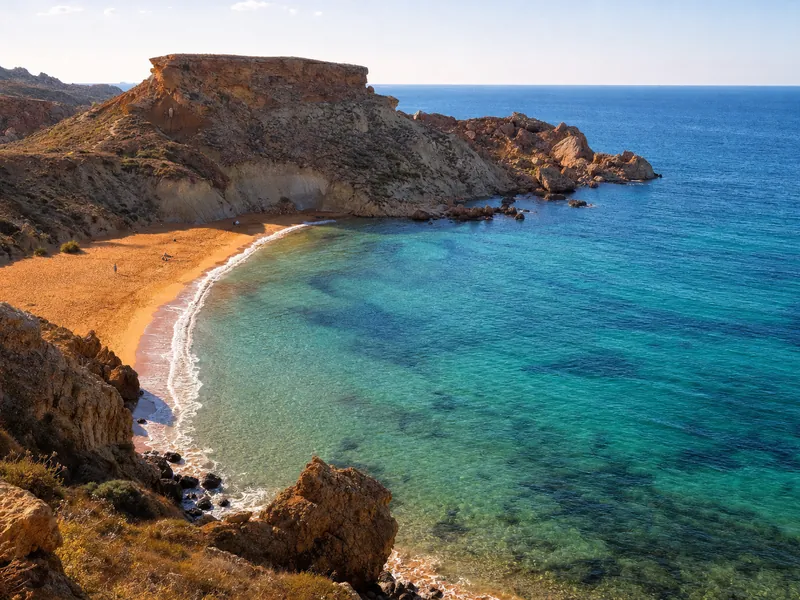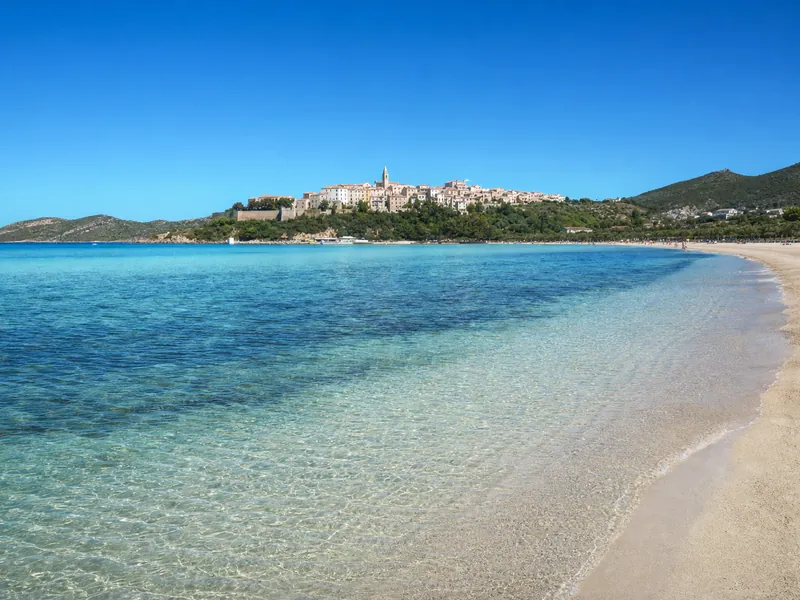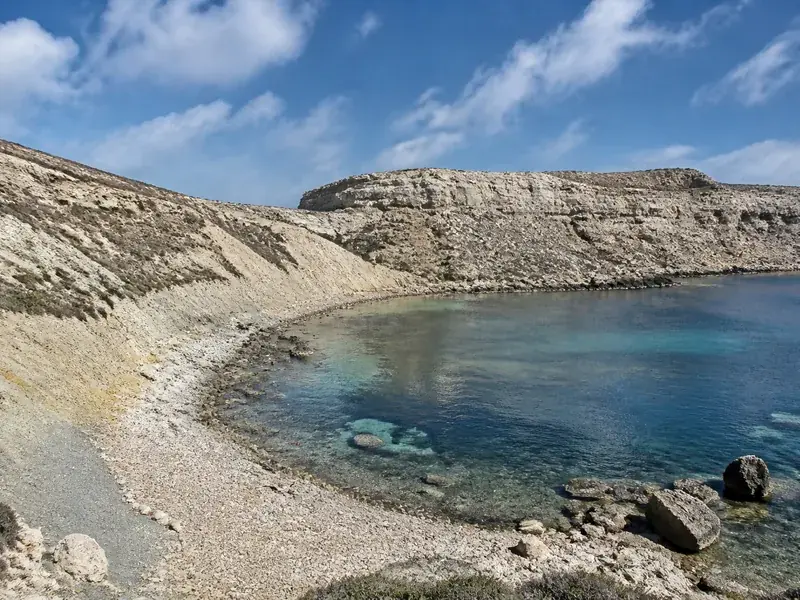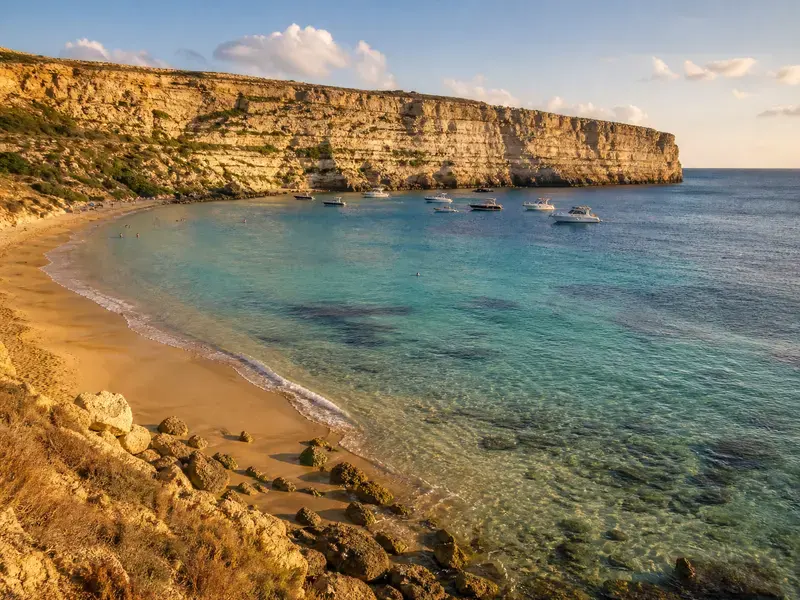
If by best you mean a wild, unbuilt cove with clear water and almost nobody around, then yes, Fomm ir‑Rih is Malta at its most beautiful and most honest. If you want soft sand, an easy stroll and a kiosk, you will be happier at Golden Bay & Għajn Tuffieħa or Mellieħa Bay.
What swings it is your season, mobility and appetite for effort. The bay sits under sheer vertical cliffs, with water that stays calm in settled weather and invites a long swim when you make it down. It is a pebble beach and the shore is pebbles, which keeps the water clear and the crowd light. Typical visitors are few, mostly hikers, snorkellers and fishermen. There are no sunbeds or beach bars, and there are no lifeguards. The name means mouth of the wind, a hint that exposure is part of the deal here. Behind the shore there is an unusual syncline, and the setting is a small lesson in Malta’s geology as much as a swim stop.
Spring and autumn suit it best. April to June turns the cliffs green with wildflowers, and the air is kind for climbing back up. September and October keep the sea warm for swimming, which makes a late‑season dip here feel like your own private Malta. July and August often push over 35°C on the exposed slope, so if you go in high summer, start early, bring more water than you think and avoid the midday return.
Getting there is straightforward until the last kilometre. It lies in Mġarr on the west coast, with Bahrija the nearest village. GPS can be unreliable and may try to send you along blocked roads or through private property, so watch for the obvious approach tracks and do not follow a turn that looks like a private drive. Ras il-Pellegrin is the headland just north of the bay, a good reference on the map if you are checking your bearings. If you want an armchair comparison before committing, read our dedicated Fomm ir‑Riħ page, then weigh it against a boat day at Blue Lagoon, Comino or a shore‑based day up at Paradise Bay.
The path down is steep, rocky and not well marked. It can be slippery in places after rain, and there are no signs or clear markers. This is not the place for prams, heavy coolers or flip‑flops. If you will linger for golden hour, bring good shoes and water, and a small flashlight if you will stay for sunset. Once on the stones the reward is immediate. The water is crystal-clear, and on a calm day you can snorkel along the edge of the cliffs with only the splash of your entry to disturb the quiet.
Parking is the next practical question. Parking is limited along a dirt path. Parking sits near the cliff edge, so do not crowd the drop and leave space for others to pass. Expect to walk the last stretch even if you arrive early, and treat the track like a farm access rather than a car park.
There is no gate, and no official opening time, but daylight matters here for safety. Public access has been disputed, with one approach road reported illegally blocked, which is another reason to use common sense and stick to obvious public paths. If in doubt, park earlier and walk rather than forcing a turn that feels wrong.
Who should skip it or save it for another day. If you have limited mobility, this is not a forgiving descent and ascent. If you want a serviced beach day, the mix of rock underfoot and lack of facilities will frustrate you. For snorkellers and strong swimmers on a still day it is superb, and divers passing through to Cirkewwa diving often rate the colour and clarity here as a worthy detour.
A few details for the curious. The Blat Moghża tower was built in the mid 17th century. It collapsed in the 18th century. It was never rebuilt. A 19th century redoubt here formed part of the Victoria Lines, and you can still spot traces if you look from the rim. The Maltese freshwater crab lives high above the bay and sea, hiding along the watercourses that cut down to the shore.
What to bring and wear. Sturdy trainers or light hiking shoes make the descent sane, and reef shoes help once you are on the stones. Pack more water than you think you need, a hat, and patience for the climb back up. If you want sand, shade and services, keep this for a cooler day and head to Golden Bay & Għajn Tuffieħa or over to Paradise Bay instead. If you want a blue‑on‑blue day without a hike, consider a boat to Blue Lagoon, Comino.
Common questions
Is Fomm ir‑Rih sandy?
No. It is a pebble beach and the shore is pebbles, so water shoes help.
Is it family friendly?
Only if everyone is steady on their feet. The path down is steep, rocky and not well marked, and there are no lifeguards or facilities.
Can I rely on my satnav to get there?
Be cautious. GPS can be unreliable and may try to send you along blocked roads or through private property. Approach slowly, follow the obvious dirt track near the end, and be ready to park and walk.
When is the best time to visit?
April to June turns the cliffs green with wildflowers, and September and October keep the sea warm for swimming. July and August often push over 35°C on the exposed slope, so start early or skip midday.
Last checked: 22 September 2026. Prices, opening hours and timetables change, verify anything time-sensitive before you travel. Image: Generated for this site with OpenAI gpt-image-2, Generated image, not a photograph of the location.